
Home/Laundry Management
OperationsBuilt beautifully. Operated relentlessly.
A beautiful room wins the contract. Uptime keeps it.
The room only works if the machines do.
Reliability is the product. Design is not covering for weak operations.
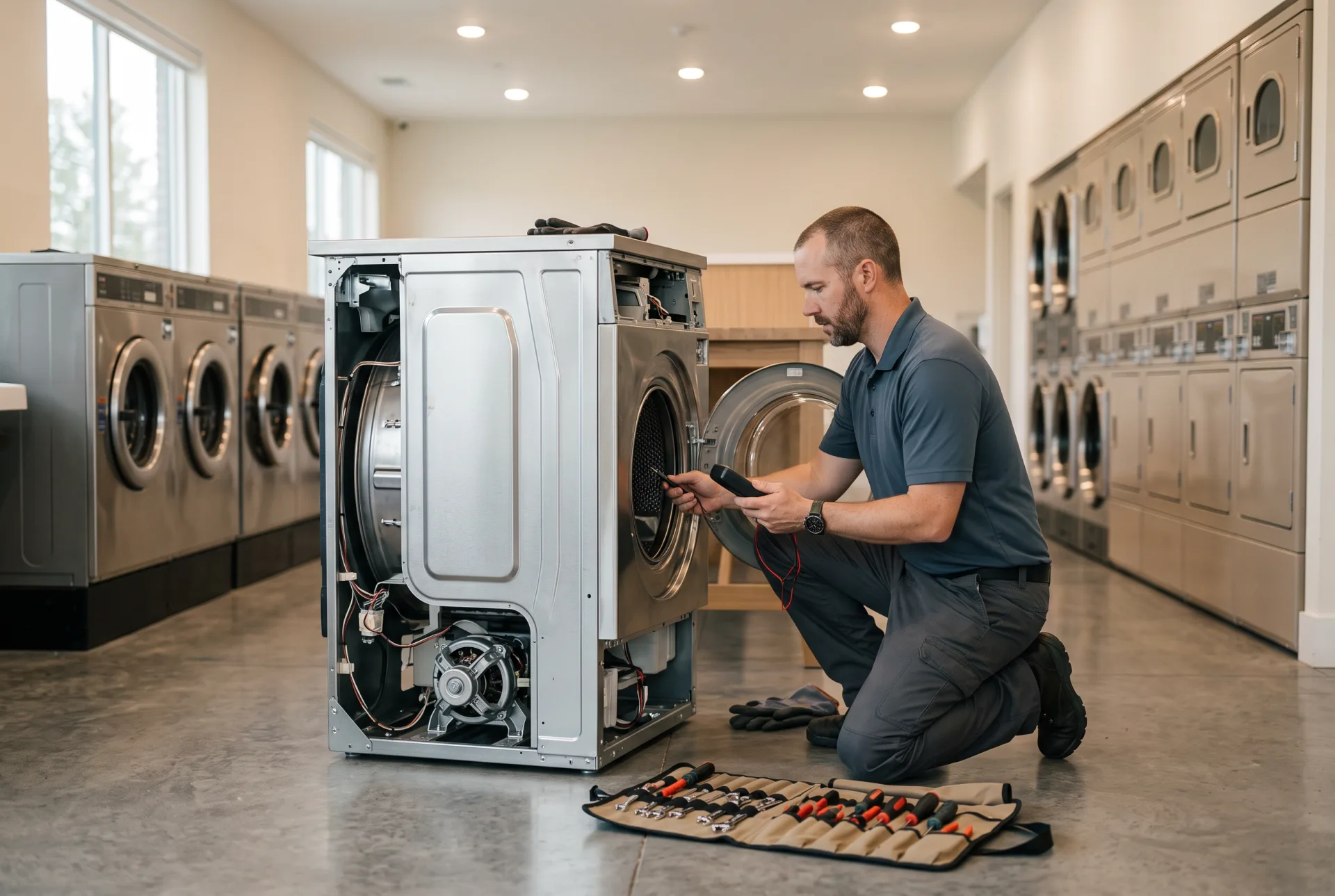
Every machine carries an asset ID with its install date, warranty, parts and fault history. That record is what makes maintenance predictable and the monthly report something other than an assertion.
What we do between the truck rolls.
Hoses, lint, gaskets, readers and drains fail in patterns. Patterns can be scheduled against.
- Monthly room inspection at minimum — hoses, leaks, lint, readers, lighting and finish damage.
- Remote diagnostics before dispatch — the technician arrives knowing the fault and carrying the part.
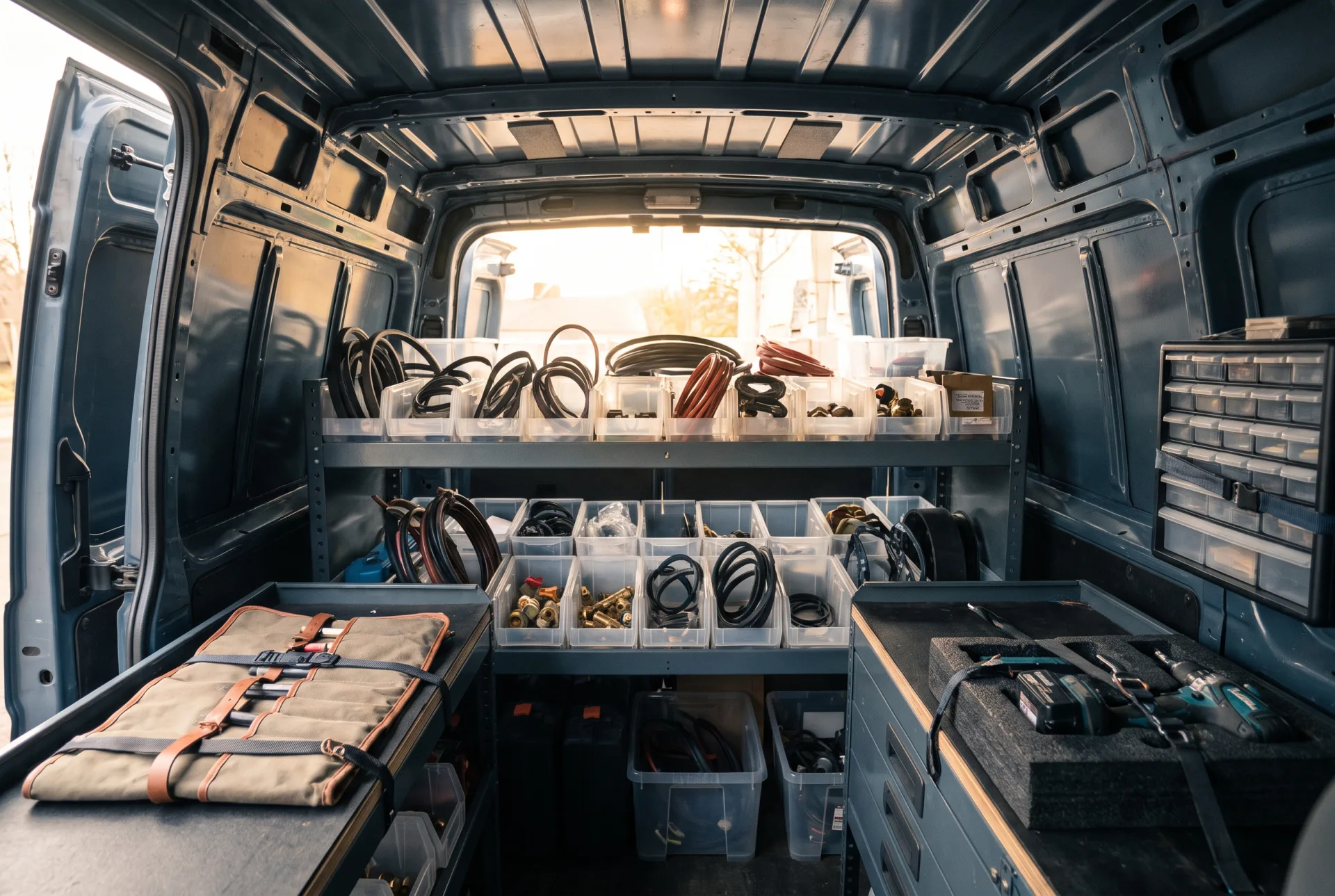
- Vehicle stock driven by failure history — not a generic parts list.
- Common equipment families — shallow parts inventory, high first-time repair rates.
- Dense service geography — a tight cluster run well beats a wide territory run badly.
- A defined escalation path — landlord-side failures get routed, not absorbed silently.
The targets we manage to.
Internal management targets, published so ownership can hold us to them. Not contractual guarantees — those come once we have the operating history to meet them.
| Measure | Management target | Why it matters |
|---|---|---|
| Machine availability | 98% or better, measured by machine-hours | The single number residents actually experience. |
| Ticket acknowledgement | Automated confirmation within 15 minutes | A resident who knows they were heard stops calling the property office. |
| Core-territory dispatch | Same or next business day | The local accountability advantage over a national route. |
| Standard repair close | 95% within 24–48 hours where common parts are available | Every hour a machine is down is lost revenue and a complaint. |
| Preventive room inspection | At least monthly, more often by usage | Catches hoses, leaks, lint, reader faults and finish damage early. |
| Refund resolution | Same day, digitally, once verified | Refund friction is the fastest way to lose resident goodwill. |
| Owner reporting | Monthly, with dashboard access as contracted | Proves both the economics and the service. |
Buy proven infrastructure. Own the data model.
Cashless is not a differentiator any more. What matters is whether you can get your own numbers out of the platform.
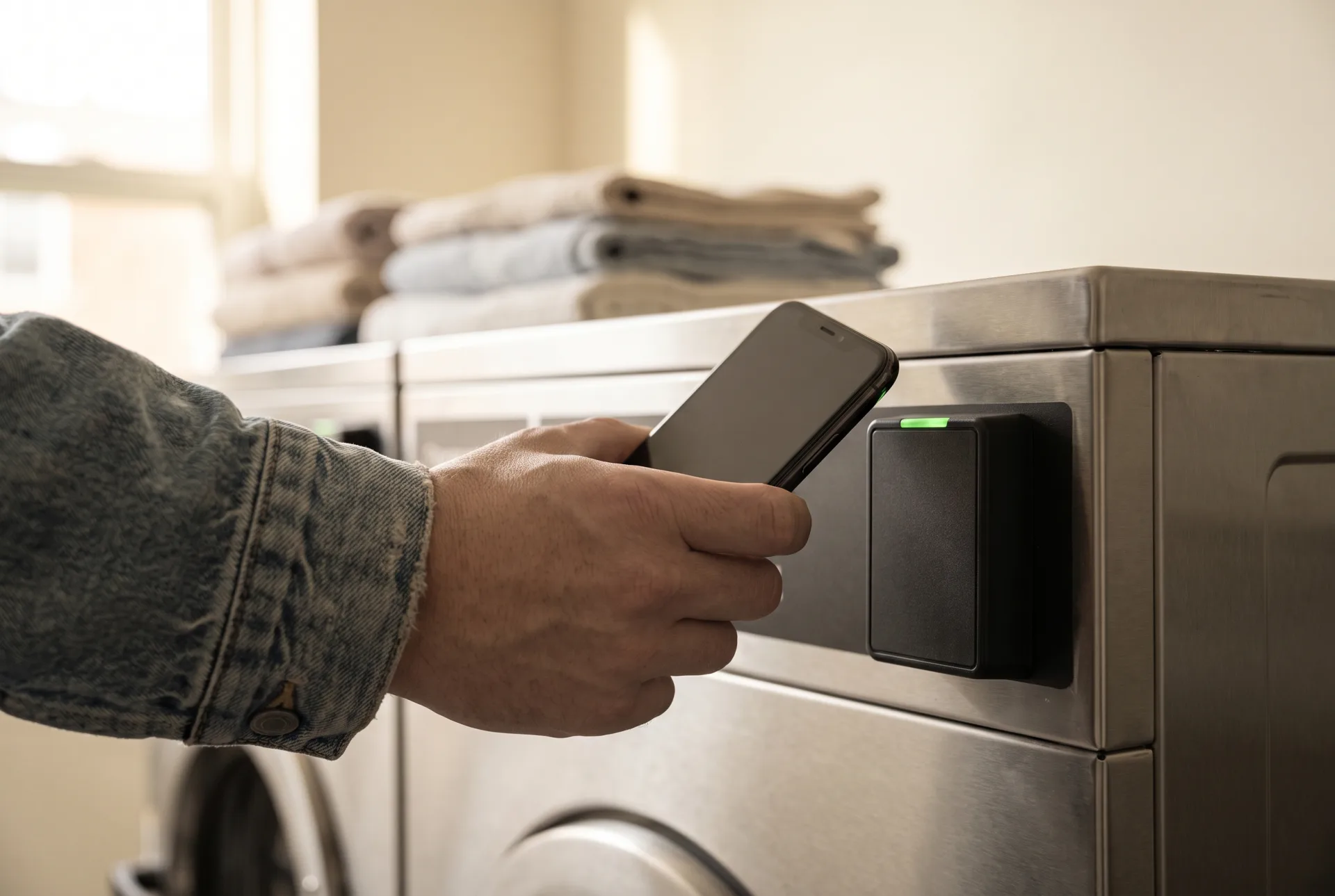
Stored-value cards, mobile payment, machine availability, notifications, refunds and real-time diagnostics. We export the core metrics into our own analytics layer, so platform dependence never becomes data dependence.
- Resident — payment, availability, cycle status, refunds
- Operator — revenue by machine, diagnostics, pricing, maintenance alerts
- Owner — monthly statement plus dashboard access to revenue, uptime and service
We are deliberately not building a resident app on day one. An app that reproduces what the payment platform already does is not a moat.
Pricing, collections and reporting.
Locking vend prices for two decades is how rooms end up unable to fund their own replacement equipment.
Set against machine size and local alternatives
Set from capacity and the local market, then tested against transaction data. Promotions are measured, not assumed.
Reconciled, not estimated
Transaction-level, not a bucket of coin. Property compensation is calculated from that record.
Property-level and portfolio-level
Revenue, owner compensation, service activity and uptime — per property, and rolled up across a portfolio.
Planning for the machines you will need in year nine.
Refresh is scheduled from the start of the agreement, not deferred until residents complain.
Fault history and parts consumption tell us when replacement beats repair. That drives the capital schedule and the renewal conversation.
Finishes get the same discipline. A room that looked excellent at handover and ordinary five years later has failed, whatever the uptime says.
Ask us what our current rooms actually do.
We would rather show you a service log than a brochure claim.